AI needs a place in the Church – but not without discernment
24 October 2026
Artificial intelligence is already changing the way people learn, work, search for information and communicate, and the Uniting Church in Queensland is now being asked to consider how it should respond.
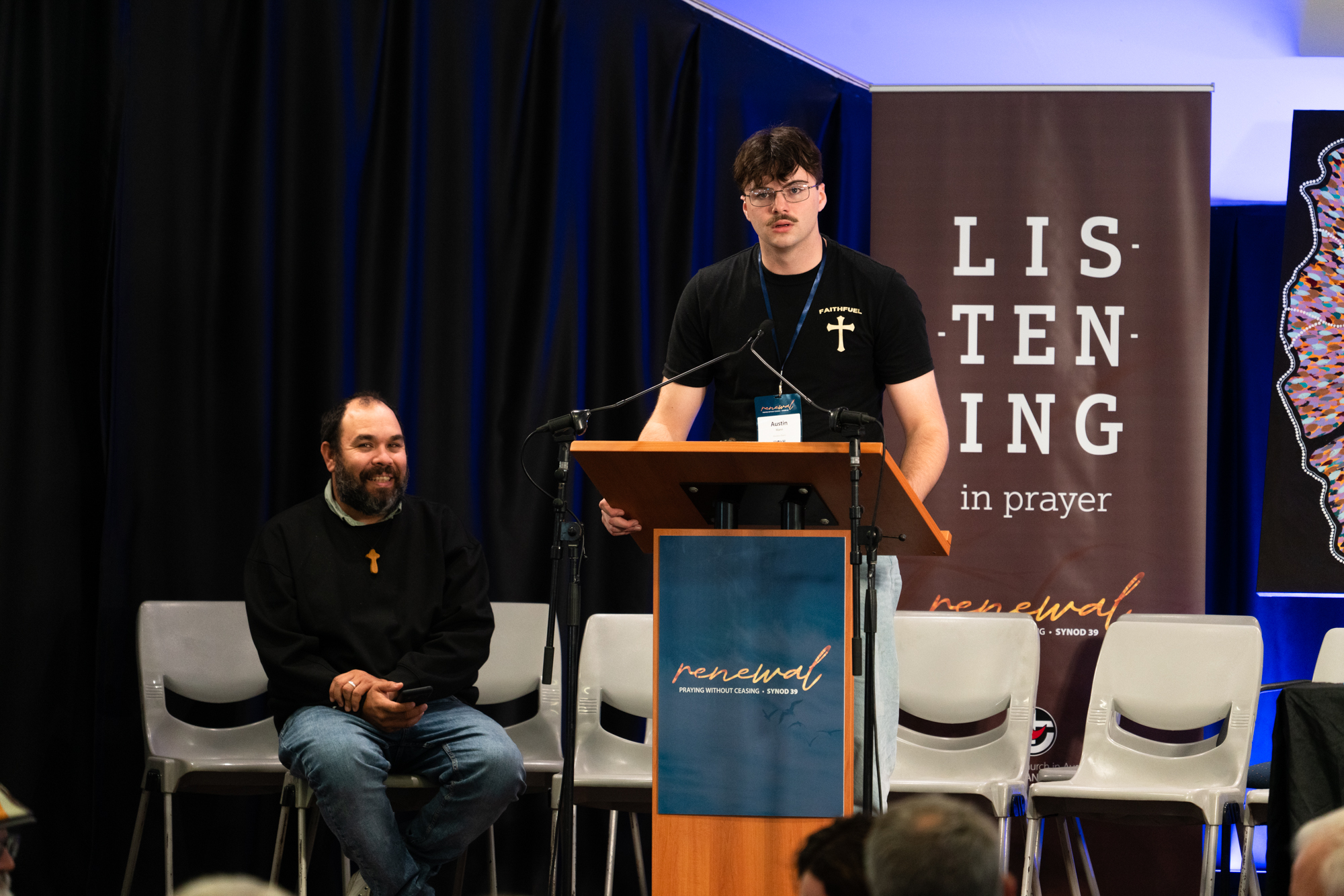
A General Proposal before the 39th Synod brought by Mr Austin Mann, a young representative from the UAICC proposed establishing an Artificial Intelligence in Ministry and Mission Task Group to develop practical guidelines for the responsible use of AI across the Church. It’s a significant step, not because the proposal is arguing for or against AI, but because it recognises that the technology is already here and that the Church needs a thoughtful way of navigating what comes next.
“As an Aboriginal man, I've been taught that tools and technologies are to be evaluated by how they serve relationships, country, and community. As we consider artificial intelligence over this weekend, I want to start off by saying that AI is making benefits to the Church. Academic research and Church experience show that when used responsibly, AI can genuinely support our shared mission,” Mr Mann explained.
That question has become more urgent as AI moves from being an emerging technology to an everyday tool. Recent McCrindle research found that 54 per cent of Australians use AI at least weekly, while 25 per cent say they never use it. The research also makes an important point: embracing AI doesn’t necessarily mean using it more, but using it to focus on what matters.
That distinction is particularly relevant for a Church whose work is fundamentally about people, relationships, faith and community.
“Generative AI tools can streamline administrative tasks, craft emails, assist in sermon research, and even translate resources into multiple languages for our cultural and linguistically diverse communities.
“AI is a fruit of human intelligence, and its practical tools can help free up time and energy for part of my ministry. At the same time, we are reminded by scholars of why clear guardrails on AI are essential. First, technology is never completely neutral. AI can reproduce bias, create data privacy risks, and generate misleading information.
“As a Church, we have a duty to protect the vulnerable and ensure digital tools are used with fairness, truth, and transparency. Second, and most fundamentally: as followers of Christ, we believe that human beings are created in the image of God,” said Mr Mann of our responsibilities in relation to the use of AI.
For a Church seeking to engage younger generations, this matters. People are increasingly encountering information, asking questions and learning in different ways, and AI is becoming part of that landscape.
But greater use doesn’t automatically mean greater trust. There’s also a clear generational difference, with Gen Z generally more willing than older generations to trust AI across a range of tasks.
That tension sits at the heart of the Queensland proposal.
The Task Group would be asked to develop guidance covering some of the most sensitive areas of Church life, including worship and preaching, pastoral care, discipleship, education and formation, communication, administration, governance and mission. It would also include people with theological, ministerial, technological, ethical, privacy, safeguarding and governance expertise. It will also need to consider more recent developments with AI becoming responsible for data breaches and look toward government regulations and safeguards in this area.
“We are asking the Synod to not be overwhelmed by anxiety surrounding AI, but to ensure that our Church leads with wisdom, theological integrity, and practical care so that we can navigate these technological changes together,” says Mr Mann.
That breadth is important because the questions raised by AI aren't simply technical ones: What happens when AI helps write a sermon? Can it assist with pastoral resources without undermining the relationship between pastor and person? How should confidential information be protected? When does using AI to create communications become misleading? Can AI help someone explore faith without becoming a substitute for Christian community? And what happens when a generated answer sounds convincing but is simply wrong?
The proposal recognises that these questions are already producing different responses across the national Church. Some see AI as a useful tool that can reduce administrative workloads, while others are concerned about authenticity, human relationships, confidentiality and the integrity of ministry. Without some common framework, those differences could become increasingly divisive.
Forty-seven per cent of Australians believe AI adoption is negatively affecting human relationships, with concern evident across every generation. For the Church, that may be the most important statistic of all.
Christian ministry depends on human connection. Pastoral care isn't simply the provision of information. Worship isn't merely the production of content. Discipleship isn't an automated learning pathway. Much of the Church's work happens through presence, conversation, listening, trust and shared experience.
AI can potentially help with some of the work around those activities, but it can't replace the relationships that give them meaning.
The same principle applies to privacy. For a Church entrusted with people's stories, pastoral concerns and personal information, that should be a significant consideration.
The Queensland proposal doesn't seek to prohibit AI, and it doesn't seek to mandate its adoption. Instead, it proposes a framework for informed, responsible and contextually appropriate discernment.
As Mr Mann explained the Task Group itself that is proposed should reflect the breadth of the Church, including lay and ordained members, young adults, First Peoples, culturally diverse communities and people with relevant expertise. It would consult across the Queensland Church before presenting guidelines to the Synod Standing Committee within six months of its establishment.
The challenge isn't to decide whether the Church should use AI. That decision is already being made every time someone opens Google. The more important question is: What kind of Church do we want to become while using it?
If AI can remove some administrative burden, perhaps that creates more time for people. If it can help someone explore an idea, perhaps it can support learning. If it can help a small congregation communicate more effectively, perhaps it can strengthen mission.
But responsible use also means knowing when not to use it. In a world increasingly shaped by artificial intelligence, the Church may have an opportunity to make a distinctly human contribution. Not by resisting technology or rushing to embrace it, but by asking the harder questions about wisdom, truth, trust, privacy, community and what it means to be present with one another.
The goal shouldn't be to make the Church more like AI. It should be to make sure that, even as AI becomes more capable, the Church doesn't become any less human.
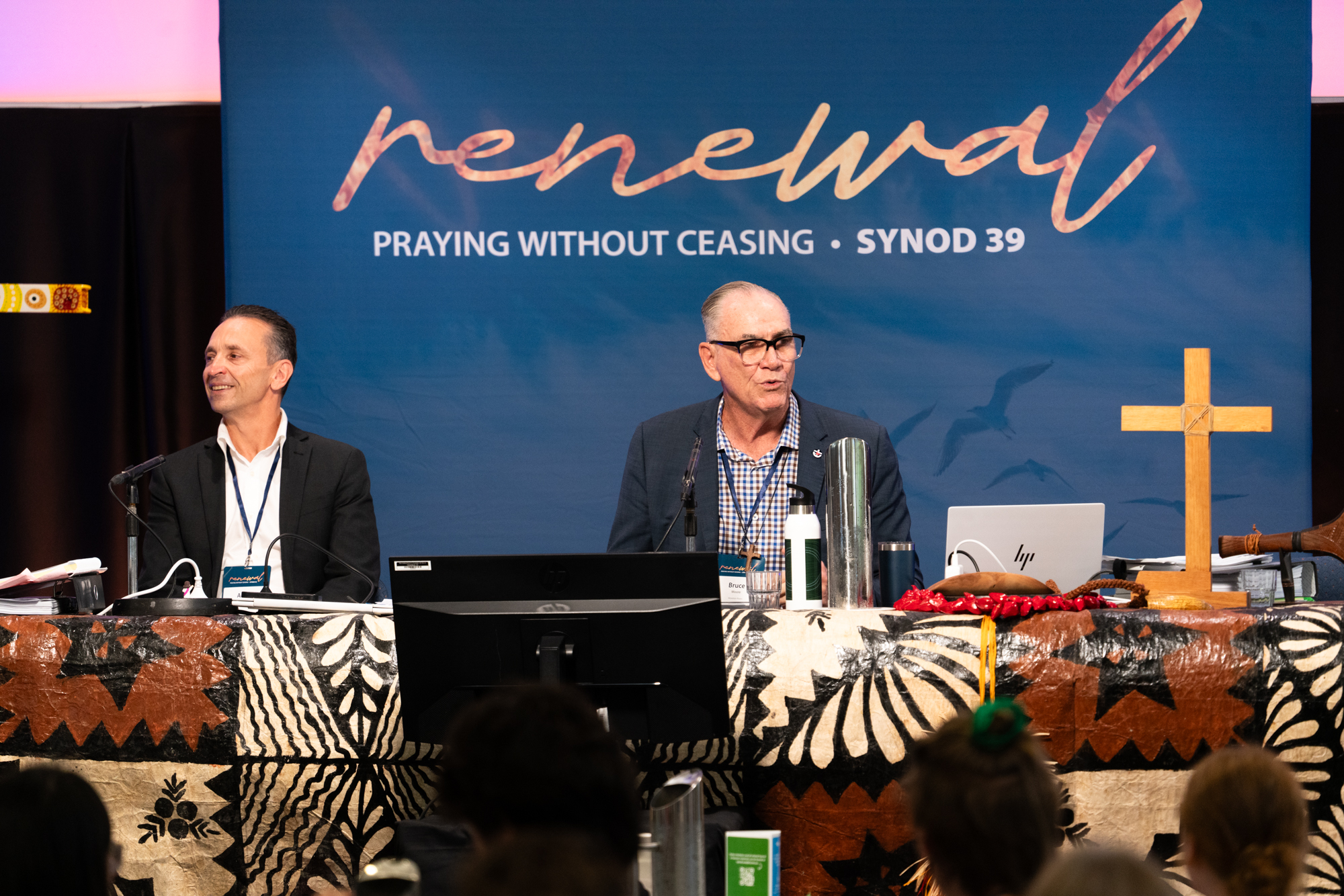
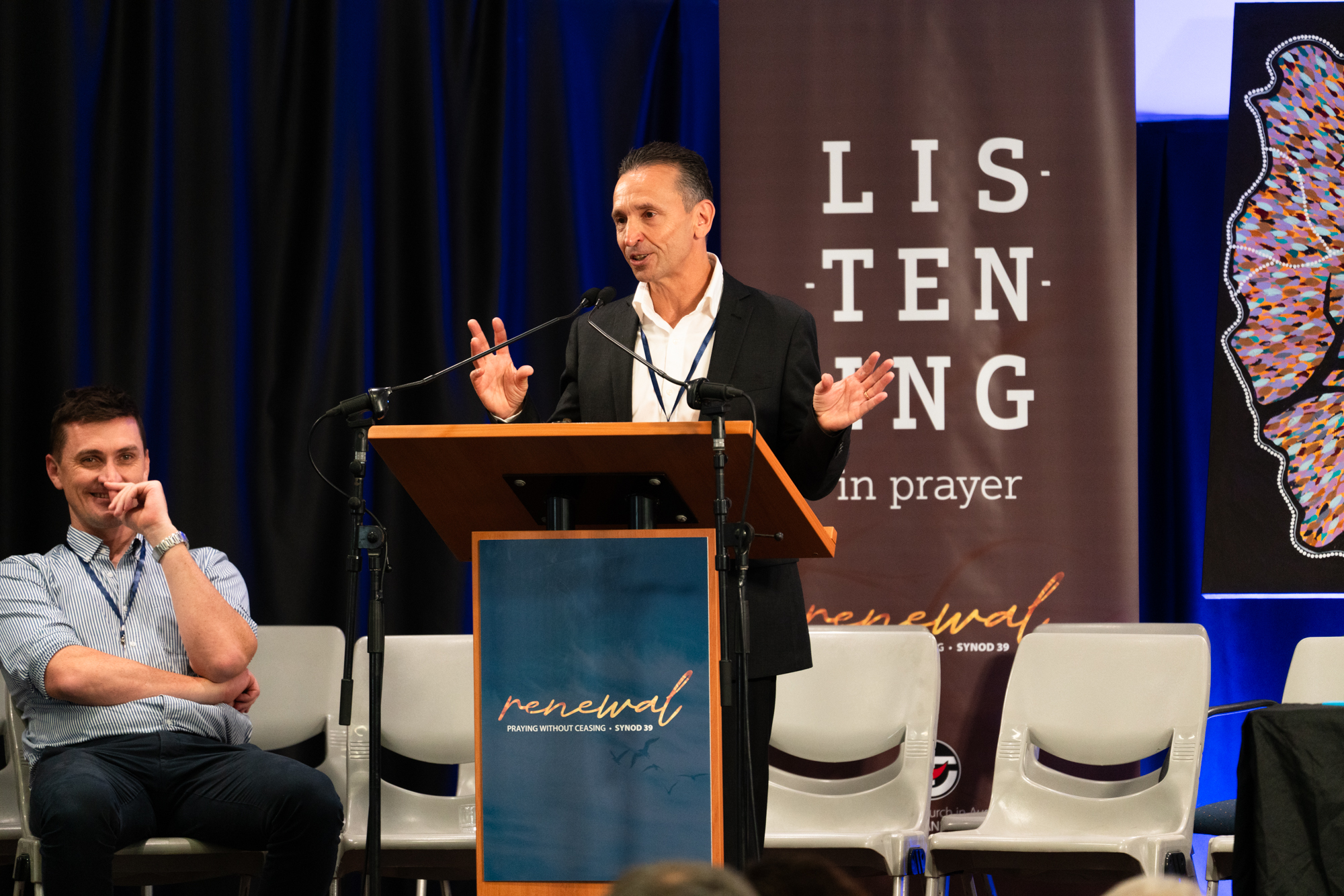
Seconder to the proposal Joshua Lane, also a UIACC representative upheld the work on the proposal done by Austin: “We need to guard and protect ministry from becoming the AI shadow of its true expression. Otherwise, we run in danger of a ministry that has the appearance of godliness but is denying true power. I want to recognize Austin for his leadership in this proposal, and I second this proposal for the Synod's discernment.”

Discipleship
Discipleship & Mission
Children, Youth, Young Adults and Families
Journey
Latest stories
Browse the latest stories of the Church