Day 3 Bible Study: An invitation for Synod to rediscover the source of renewal
26 October 2026
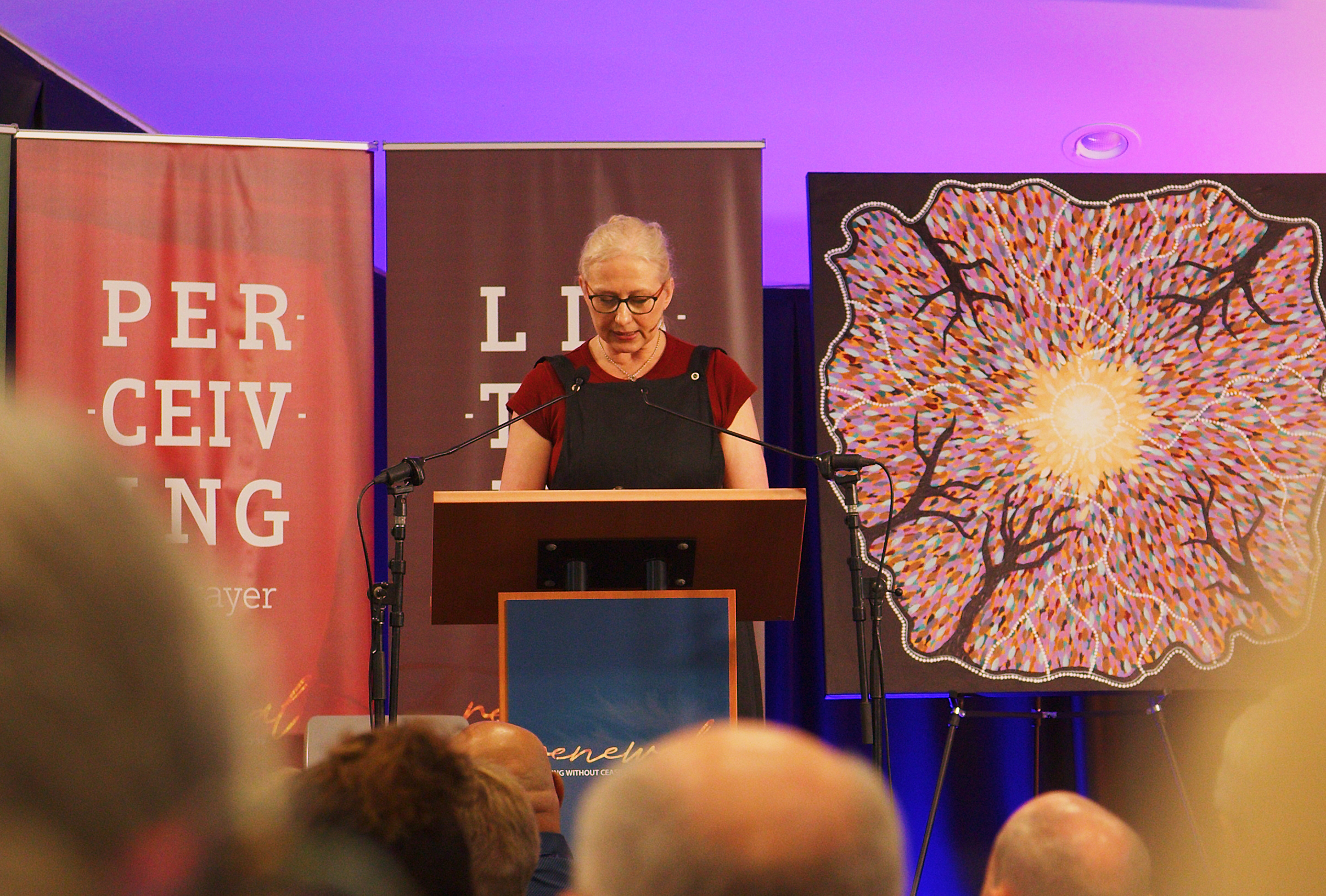
Renewal begins not with working harder, producing more or finding the next big idea, but with returning to the source of life. That was the message from Ps Mandy Smith during the Bible study on Day Three of the 39th Synod in Session, where she reflected on Jeremiah 17:5–8 under the day's theme, Abiding in Prayer with a reflection entitled From Desert to Living Water.
Through the image of two trees in the reading, one struggling in the desert and the other flourishing beside a stream, Ps Smith invited Synod members to consider where they turn for strength, particularly during seasons of uncertainty and challenge.
Her reflection centred on a simple but searching question: “How, when, and where do you turn to God?” She encouraged members to think beyond prayer in formal worship and consider the everyday practices that sustain their relationship with God.
The passage from Jeremiah contrasts those who trust in human strength with those who place their trust in God. The first becomes like a shrub in a parched wilderness, while the second is like a tree planted beside water, whose leaves remain green even when the heat comes and the rains fail.
For Ps Smith, the passage is not simply about choosing which tree to become. It is about identifying where we draw our strength.
“The question is not which one we want. The question is where we go for our sustenance,” she said.
Abiding in prayer when ministry feels like a desert
The theme of Abiding in Prayer offered a timely framework for Ps Smith's reflection. To abide is to remain connected to God, not only when life and ministry are flourishing, but also when the way forward feels uncertain or dry.
Ps Smith acknowledged that ministry can be exhausting. Churches and their leaders experience seasons of disappointment, uncertainty and apparent lack of growth. In those moments, the temptation is often to work harder, develop new programs or search for solutions through sheer determination.
But this can become a cycle in which the harder people work to produce results through their own strength, the further they move from the source that sustains them.
“We work so hard to become the fruit-bearing tree that we unwittingly become the withered tree,” Ps Smith said.
She was careful not to suggest that suffering is evidence of insufficient faith, or that prayer should replace practical action. Some hardship arises from circumstances beyond our control, including injustice and inequality. Nor was she suggesting that faithful ministry requires people simply to stop working and wait for God to act.
Instead, Ps Smith invited members to consider whether their habits, assumptions or ways of working might sometimes obstruct the life and fruitfulness they hope to see.
The dryness of ministry, she suggested, can become an invitation to return to God rather than an instruction to push harder in our own strength. Abiding in prayer means continually turning back to God as the source of wisdom, hope and renewal.
Renewal begins with dependence on God
The Bible study took place as Synod continued its work of discerning the future of the Church. Against that backdrop, Ps Smith offered a reminder that renewal cannot be measured only by visible outcomes, such as church growth, new programs or successful initiatives.
“Ultimately the renewal that a passage like this is calling for is to dig down deep back into the source of life that we are promised in God,” she said.
Ps Smith connected Jeremiah's image of the tree planted beside water with Jesus' words in John 15, where he describes himself as the vine and his followers as branches. Both images point to the importance of remaining connected to the source of life.
Even Jesus, she observed, regularly withdrew to spend time with the Father. His ministry was marked by dependence, hard work and suffering. It did not produce the kind of institutional success that people might ordinarily use to measure achievement, yet his life continues to transform people across generations and around the world.
For Ps Smith, this offers a different understanding of fruitfulness. It may lead to growing congregations, baptisms and new ministries, but these outcomes are not the starting point. The deeper work is the transformation of lives through dependence on God.
Before the Church asks what new programs it should establish or what strategies it should pursue, it must remain attentive to the source from which its life and mission flow. Prayer is not separate from this work. It is part of how the Church listens, discerns and remains open to God's direction.
A calling, not a burden of endless work
Ps Smith also challenged the idea that Christian service means carrying an unlimited burden of responsibility, regardless of the cost to the person serving.
She described how a sense of duty can become a kind of oppression, leaving people believing they must keep working until they are exhausted, without the freedom to rest or ask for help.
“I think it's a lie from the darkness, because we are free children of the Most High God,” she said.
The Church, she argued, is invited to participate in God's work of restoring creation, not to carry that work alone. God is not a distant taskmaster who leaves people to manage an impossible assignment. Rather, God is active in the world and invites people to join in that mission.
This does not mean the absence of sacrifice or difficulty. Ps Smith acknowledged that following Jesus can involve suffering and the surrender of control, comfort and convenience. But this suffering is not something people must endure in isolation.
“Jesus knows,” she said. “And Jesus suffers with you.”
Her message offered encouragement to those who feel tired, confused or discouraged by the challenges of ministry. The Church's calling is demanding, but its members are not abandoned to fulfil it through their own strength.
Abiding in prayer creates space to remember that Christian service grows out of a relationship with God. It is not an invitation to endless activity, but to a life of faithful participation in God's work, sustained by God's presence.
Returning to the stream
Ps Smith concluded by inviting Synod members into a period of silence, prayer and reflection. Rather than immediately returning to the business of proposals and decisions, she encouraged them to consider what they might be relying on instead of God, and whether any habits or mindsets were getting in the way of the fruit they hoped to see.
She described repentance not as an exercise in guilt, but as a turning towards the life God offers.
“Every day an invitation to thirst for the river and turn back to that source of true hope and true power once more,” she said.
The invitation was both personal and communal. As the Uniting Church considers its future, Smith's reflection asks what renewal might look like if it began not with anxiety about outcomes, but with a deeper trust in God.
Jeremiah 17:5–8 offers no promise that drought will never come. Instead, the image of the tree beside the stream points to a source of life that remains available even in difficult seasons.
For Synod 39, the theme Abiding in Prayer brought this into focus: renewal involves more than finding new ways to work. It also means making space to listen, to return to God and to trust in the life that God provides.
The question is not simply how the Church can become more fruitful, but how it can remain rooted in the One from whom that fruitfulness comes.

Discipleship
Discipleship & Mission
Children, Youth, Young Adults and Families
Journey
Latest stories
Browse the latest stories of the Church