Come step into formation…
9 November 2026

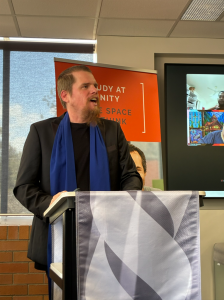
by Matt Brandon with Rev Paul Clark, Dean of Formation, Trinity College
The team at Trinity College is busy helping to form the next generation of ministry agents for the Uniting Church. Every six months we sit down with our students and invite them to reflect on where God is forming them. We see and hear the profound ways God is at work in their lives. I thought I would share one student’s feedback from the latest round of panels to demonstrate formation at work…
Matthew Brandon shared about his ministry practicum, and how his classroom learning intersects with real world ministry…
“The time has finally arrived: I can no longer say that it’s all been theoretical. Since beginning my practicum it has felt a bit like Formation classes on steroids. Everything we’ve been exploring about building relationships and the practicalities of congregational life has been on full display. I have enjoyed every moment of it so far, not in a romanticised ‘honeymoon phase’ kind of way, but with a growing confidence that I am still on the right path.”
“Trying to balance Church, study, work and family life is not always easy, but at no point have I felt that it was too much. Yes, I have come close to being overwhelmed, but never because I questioned my calling. Sometimes life is simply a lot. The transition into ministry formation has involved a much broader range of responsibilities than I was previously accustomed to. Balancing academic work with sermon preparation, youth messages, and congregational life has taken some getting used to, but it has been a worthwhile experience. I'm busy, but I'm happy.”
“The biggest eye-opener for me has been the ratio between theology and pastoral care in ministry. Call me naïve, but I expected my conversations with congregants to be much closer to a 50:50 balance between the two. So far, however, it has been more like 15:85 in favour of pastoral care. This is not a source of frustration; I had simply assumed that people would want to talk about the Bible and theology more often. This has helped me appreciate that ministry is often less about providing theological answers and more about being a faithful, present, and caring companion in people's lives.”
We ask students to submit a piece of their academic work, and reflect on how it demonstrates their formation…
“The piece of assessment I’ve chosen to share is not my best. But it has been a catalyst for continued self‑reflection, growth, and a foundation for how I offer pastoral care. I’ve chosen my essay from the Pastoral Skills unit. I believe the theory and theology grounding the assessment is solid - I’m proud of that work - but within the essay I missed the mark on what I was actually being invited into: genuine self‑evaluation and reflection.”
“Looking back, the value of this assessment isn't found in the mark it received, but in the way it continues to shape both my self-awareness and my pastoral practice. The theology and theory show what influences my pastoral skills, but there is a significant difference between knowing good pastoral care and providing good pastoral care. I’m grateful that I ‘failed’ to demonstrate strong self‑reflection in the assignment, because it revealed where I needed to grow before stepping more fully into ministry.”
“This became clear during a conversation with a congregant at a youth service. While others were with the kids, she pulled me aside to talk through some theological concerns. Driving home, I realised I had made the same mistakes I hadn’t recognised in the assignment: instead of inviting her to reflect on her inner world through reflective listening, I went straight into ‘fix‑it’ mode - offering answers and steering her toward my understanding. Thankfully, the stakes were low, but the insight was immediate. Since then, I’ve been far more attentive to reflective listening, and several pastoral conversations have been genuinely helpful for those who’ve come to me. I have this assignment - and the unit as a whole - to thank for that growth.”
“I have learnt that ministry is much more about presence, listening, and speaking into the realities of everyday life than it is about theoretical reflection on life's big questions. The sermon is where much of that larger theological conversation takes place. Beyond that, many people are primarily concerned with family, relationships, health, work, and the ordinary challenges of daily life. I assumed that, as a pastor, there would be more explicit "How does GOD fit into this?" conversations. Instead, I have discovered that pastoral ministry often involves helping people navigate life's realities while trusting that GOD is present within them.”
“The more I reflect on this, the more obvious it seems, particularly in light of the example of Jesus. He came and dwelt among us. He healed, listened, fed, and accompanied people in their struggles. While Jesus certainly taught and preached, much of His ministry was expressed through His presence among ordinary people. People were drawn to Him because He brought healing, hope, and compassion into their lives. Increasingly, I am learning that faithful ministry is often less about having the right answers and more about being a Christ-like presence in the lives of others. If this was central to Jesus' ministry, I should not be surprised to find it central to my own formation as a pastor.”
It’s a privilege to be able to journey with those who are working out God’s calling in their lives. How could Trinity empower your ministry journey?


Discipleship
Discipleship & Mission
Children, Youth, Young Adults and Families
Journey
Latest stories
Browse the latest stories of the Church