Day 4: Queensland Synod sets goal of 40 new churches in a decade
27 October 2026
Queensland Synod sets goal of 40 new churches in a decade
The 39th Queensland Synod is building on its decision to pursue 20 per cent growth through church planting, setting a goal of establishing 40 new churches over the next decade while renewing existing congregations for mission.
The commitment, adopted at the previous Synod in Session, is now moving from strategy to action, with six new churches planted and another 10 in development, Rev. Ralph Mayhew told members during a presentation on church planting and revitalisation.
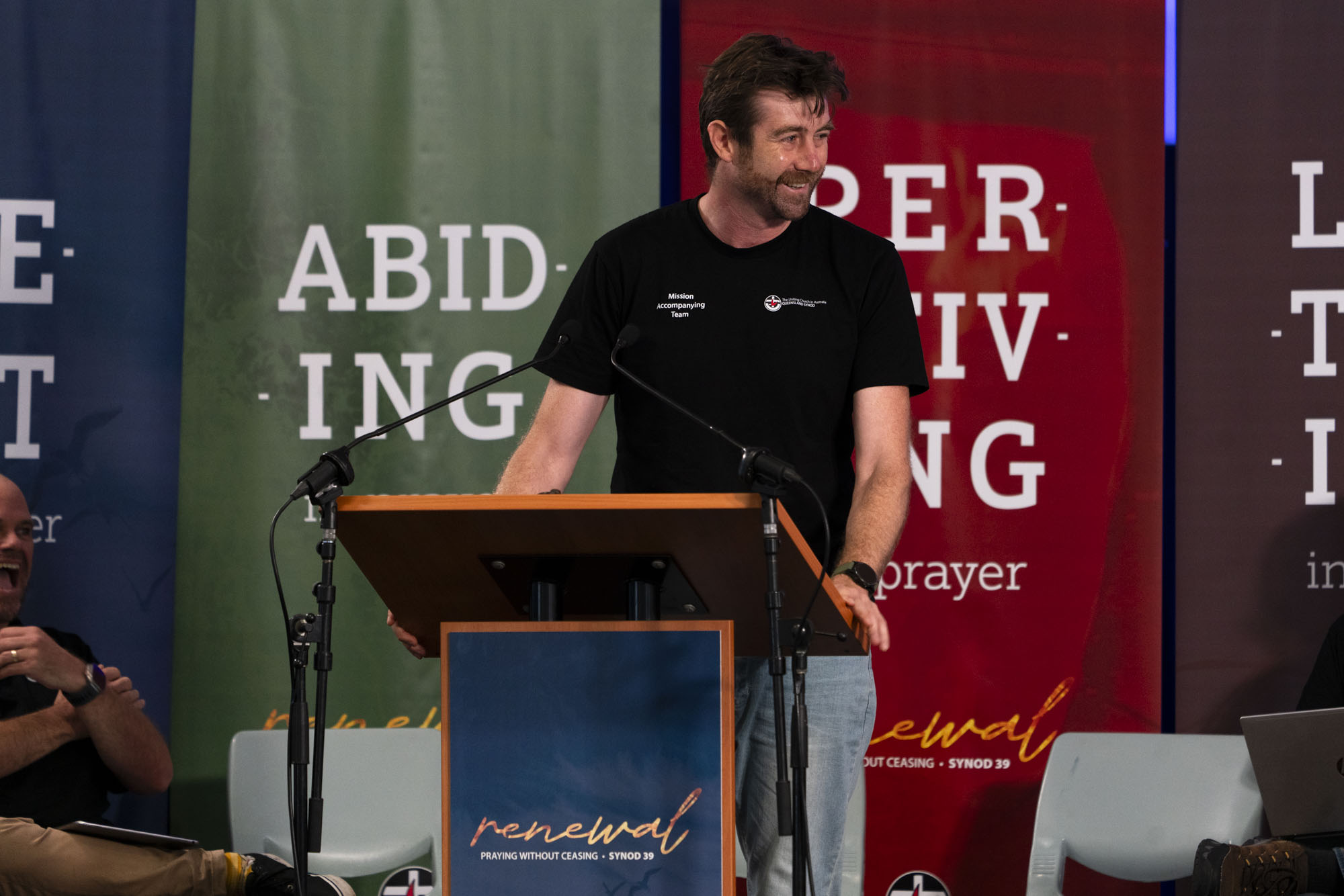
Presenters Rev. Scott Guyatt, Adam Legge and Rev. Mayhew outlined the work underway to support congregations, equip leaders and create new faith communities across Queensland. They emphasised that the task belongs to the whole Church, not just the Synod or its mission accompanying team.
“This is not the work of the Synod,” Rev. Guyatt said. “This is the work of all of us.”
Stewarding the Church for the next generation
Adam Legge, who works with the Synod's Mission Accompanying Team, invited members to consider the legacy they are leaving for future generations.
Drawing on the idea that a valuable possession is held in trust for those who come after us, he said Churches should be understood not as something to own, but something to steward.
“We never really own the Church; you merely steward it for the next generation,” he said.
For Mr Legge, renewal is about more than reversing declining numbers. It means cultivating healthy communities that make disciples, pray, read the Bible, worship, recognise and use people's gifts, and maintain financial sustainability.
Healthy churches, he said, intentionally and confidently bring the good news of Jesus into the communities where they are located.
The mission accompanying team has worked with more than 15 churches on renewal, building relationships with congregations and presbyteries to understand their circumstances and discern possible futures.
Mr Legge emphasised that the process begins with listening: hearing both the hopes congregations hold for the future and the grief associated with unfulfilled dreams.
Each church is different, he said, and revitalisation cannot be reduced to a single model or a standard set of steps.
Instead, the team adapts its support to the needs of each community, accompanying congregations as they explore their mission, make decisions and put plans into practice.
Renewal also takes time. Where unhealthy patterns and strained relationships have developed over many years, meaningful change may require sustained effort, patience and prayer.
Feedback shared with Synod members highlighted the value of having someone walk alongside congregations, ask challenging questions and help leaders see possibilities beyond the demands of everyday ministry.
Church planting can begin in unexpected places
Rev. Mayhew challenged members to broaden their understanding of what it means to plant a church.
Citing Queensland's population of 5.74 million and 2,734 active churches, he argued that more churches are needed to create opportunities for people to encounter the Christian faith.
The Synod's goal is to establish 40 new churches within 10 years. Rev. Mayhew reported that six new churches had been planted, three of which were less than five years old, with another 10 church plants in development.
Church planting, he said, does not necessarily begin with a building, a large congregation or an established organisational structure.
It might start with a Bible study in a local café that begins to grow, a home church reaching its neighbourhood, or a community meal where conversations about faith emerge. It could also begin with people gathering young adults or responding to a community where there is no church.
These beginnings can develop into more established faith communities over time.
Rev. Mayhew said a new church does not need to have every element of church life fully developed from the outset. A community might begin with some combination of worship, prayer, sacramental life and biblical teaching, growing towards a fuller expression of church as it develops.
The possibilities depend on the needs of the community, the imagination and compassion of those involved, and their willingness to respond to God's call.
An invitation for every congregation
The presenters stressed that church planting and revitalisation cannot be left to specialist teams or individual ministers. Congregations, church councils and presbyteries all have a part to play.
Rev. Mayhew introduced the Seven Phases of Church Planting, a resource designed to help congregations understand the process and consider how they might participate.
He encouraged members to explore the resource, discuss it with others and identify people who might be interested in contributing to new faith communities.
Support from existing churches can take different forms, including prayer, financial giving, sharing practical experience and encouraging people to spend a season helping a new community grow.
The testimonies presented to Synod also acknowledged the challenges of church planting. Building a team, establishing relationships with a local community and helping people reconsider their perceptions of church can be difficult work.
Yet those involved also spoke of the joy of seeing new communities emerge and of discovering leadership gifts they had not previously recognised.
The message was that renewal is neither simple nor immediate, but it is possible when people work together with patience, courage and a willingness to learn.
The session concluded with a prayer led by Mr Legge, inviting the Holy Spirit to renew the Church, open people's eyes to those who feel disconnected from it, and inspire creative responses to communities' needs.
As the Synod looks towards its goal of 40 new churches, the challenge is for every congregation to consider how it can contribute to that future.
The question is not only how existing churches can be sustained, but how the Church can make room for people who have yet to find a place within its life.
Click here to read the Seven Phases of Church Planting

Discipleship
Discipleship & Mission
Children, Youth, Young Adults and Families
Journey
Latest stories
Browse the latest stories of the Church